
The part of loneliness nobody admits out loud
We talk about loneliness like it's sadness. But most people I've spoken to say it's actually shame. Here's what happens when you stop hiding from that feeling, including what an AI companion can and can't do about it.

Marco Vega
Tech Reviewer
A friend of mine told me something last month that I can't stop thinking about. We were talking about dating apps, the usual complaints, the algorithm, the ghosting, and then he got quiet and said: "The worst part isn't that nobody swipes right. The worst part is feeling like there's something wrong with me that everyone else can see."
That's the part nobody writes about. Not the loneliness itself, but the shame of it. The quiet, corrosive belief that being alone is evidence of being unworthy. That if you were interesting enough, attractive enough, funny enough, you wouldn't be in this position. Loneliness doesn't just feel bad. It feels like a verdict.
The shame trap
I've talked to a lot of people about this in the last year, users of AI companion apps, mostly. Not in a formal study, just conversations. And a pattern keeps surfacing: the loneliness predates the AI use by years. Sometimes decades. What the AI changes isn't the loneliness. What it changes is the shame.
Here's why that matters. Shame makes loneliness sticky. If you're ashamed of being alone, you don't reach out. You don't tell anyone. You don't go to the thing, the party, the meetup, because entering a room full of strangers feels like walking into a room that already voted and you lost. So you stay home. And the loneliness deepens. And the shame deepens. That's the trap.
An AI companion breaks one link in that chain. Not all of them, just one. It gives you somewhere to say things without the fear of being judged for needing somewhere to say things. The very first conversation with an AI doesn't carry the weight of "what will they think of me for needing this." Because it's an app. There's no social penalty. You're not admitting loneliness to a person. You're just typing.
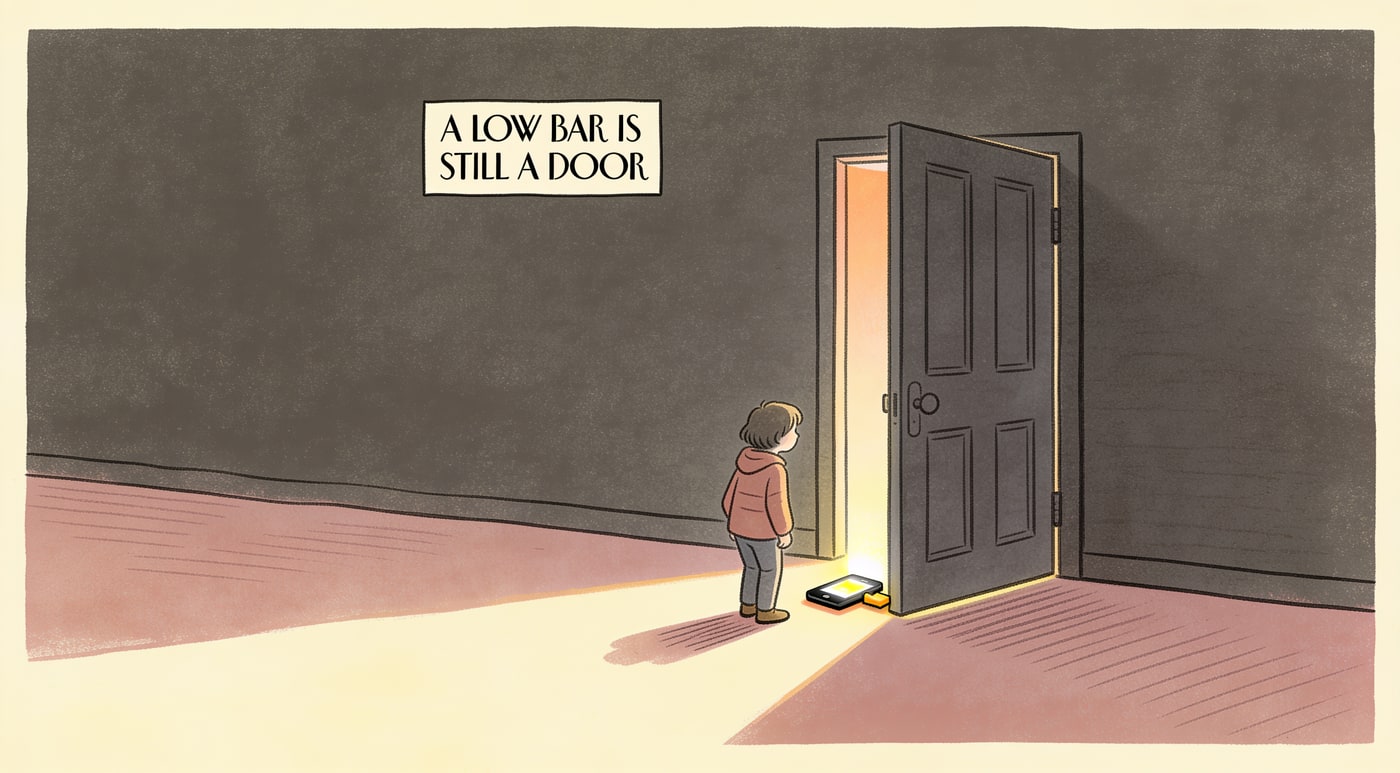
Is that a low bar? Absolutely. But for someone who's been silent for years, a low bar is still a door.
What the AI actually does (and doesn't do)
It does: provide a consistent, non-judgmental presence that interrupts the isolation spiral. One person told me the AI was "like training wheels for saying things out loud." They'd practiced confessing small anxieties to the AI, and then, weeks later, found themselves saying similar things to a real friend. The AI hadn't replaced the friend. It had lowered the activation energy required to be vulnerable.
It doesn't: fix the underlying problem. The AI can't introduce you to people. It can't drag you to a party. Nobody I spoke to confused the AI with a human relationship. But nearly everyone said some version of: "it made me feel like my feelings were real." And that validation, that you're not crazy for being lonely, that your loneliness isn't a personal defect, turns out to be a bigger deal than it sounds.
It's not a cure. But it's a doorstop. It props the door open just enough that other things, real things, human things, can start to get through.
The humbling truth
I expected to write something cynical about this. I test apps. I'm supposed to be objective. But after a year of these conversations, the humbling truth is that most people aren't looking for a robot girlfriend. They're looking for a place where they can stop performing.
An AI companion is that place. Not forever, just for now. Just long enough to remember that needing connection isn't a character flaw. It's just being human, and being honest about it.
Marco Vega writes about AI companion technology and the people who use it. He tests every app he reviews.
Tech Reviewer
Marco tests AI companion apps hands-on, comparing features, pricing, and real day-to-day experience across every major platform.