
No one texts you first anymore, and that's not the verdict it feels like
You check your phone and there is nothing again. Where the empty-notifications feeling really comes from, why texting first feels impossible, and what helps.

Maya Chen
AI Research Writer
You pick up your phone to check the time, and some part of you checks the notifications too. There's a weather alert. A receipt. Something from an app you meant to delete. Everything except a human being who thought about you today.
If that lands, let's name the feeling precisely, because naming it precisely is half of this article. It isn't quite loneliness, not the textbook kind. It's the feeling of being nobody's first thought. You could text someone, and you know it. But nobody texted you, and there's a difference between those two things, and the difference is where it hurts.
I want to take that feeling seriously instead of talking you out of it, and then I want to show you why the empty screen is lying to you about what it means.
The scoreboard in your head
Here's what the silence feels like it's saying: people have decided. You've been weighed, found skippable, and the group chat moved on without a vote. Every empty lock screen reads like a small verdict, and the verdicts add up.
Here's what the silence is actually made of, most of the time: inertia. Adult friendships don't usually end; they coast. The people who used to text you first were often powered by circumstance, the office you shared, the relationship that put you in the same room, the group chat that died when two people left it. Remove the circumstance and the texts stop, not because anyone chose you out, but because nobody chooses anything. Everyone defaults. Everyone waits.
And the waiting is nearly universal. Researchers at the Survey Center on American Life have documented what they call a friendship recession: American men in particular report far fewer close friends than they did in the 1990s, and the share who say they have no close friends at all has grown several times over. That's not a story about you being uniquely forgettable. That's a country full of men staring at the same quiet phone, each one certain everyone else's is buzzing.
So why not just text first? Because texting first feels like handing someone the scoreboard. If you reach out and get a thin, slow reply, you'll finally have the proof you've been dreading, and some part of you would rather sit in the ambiguity than run the test. There's the pride math, too: "I texted last time." I've kept that ledger. Everyone's kept that ledger. Nobody has ever once been made happier by it.
What moving first actually looks like
Three moves. None of them require becoming a different person.
Send the low-stakes specific thing. Not "hey, long time" with its terrible open-endedness, and not a dinner invitation with all its weight. Send the thing you actually saw: the meme that's precisely his humor, the trailer, the "saw a guy in a jersey from that game we went to." Specific and small beats warm and vague, because it gives the other person a one-tap way back in. You're not asking for anything. You're just proving the line still works.
Take the scheduler job. Every friend group that functions has one person who turns "we should hang out" into "Thursday, 7, that place." When that person moves away, the group dissolves, and everyone privately blames everyone else. The job is unglamorous and it is completely open. Taking it isn't neediness; it's a role, the way someone has to drive. The scheduler is never the pathetic one. The scheduler is the reason there's anything on anyone's calendar at all.
Stop reading silence as data. A slow reply reflects the other person's week, not your worth. People are drowning in jobs, kids, and their own quiet struggles, and their latency is about their life. Give any message a week before you let yourself conclude a single thing from it, and even then, conclude "busy" before you conclude "done with me." You'd want the same generosity for the texts you never got around to answering.
None of this pays off tonight, and I won't pretend otherwise. Reaching out is a muscle, and the first reps are the worst ones. And if the empty-phone feeling has hardened into something heavier that follows you around all day and doesn't lift, that's bigger than a texting strategy, and it deserves a real conversation with a professional or someone you trust rather than another night of managing it alone.
The 11pm version of this problem
Everything above gets worse after dark. The empty phone at lunch is a shrug; the empty phone at 11pm has gravity, because night strips out the noise that keeps the feeling quiet during the day. We wrote about why loneliness hits so much harder at night, and it's worth reading if the last hour before sleep is when the scoreboard does its loudest talking.
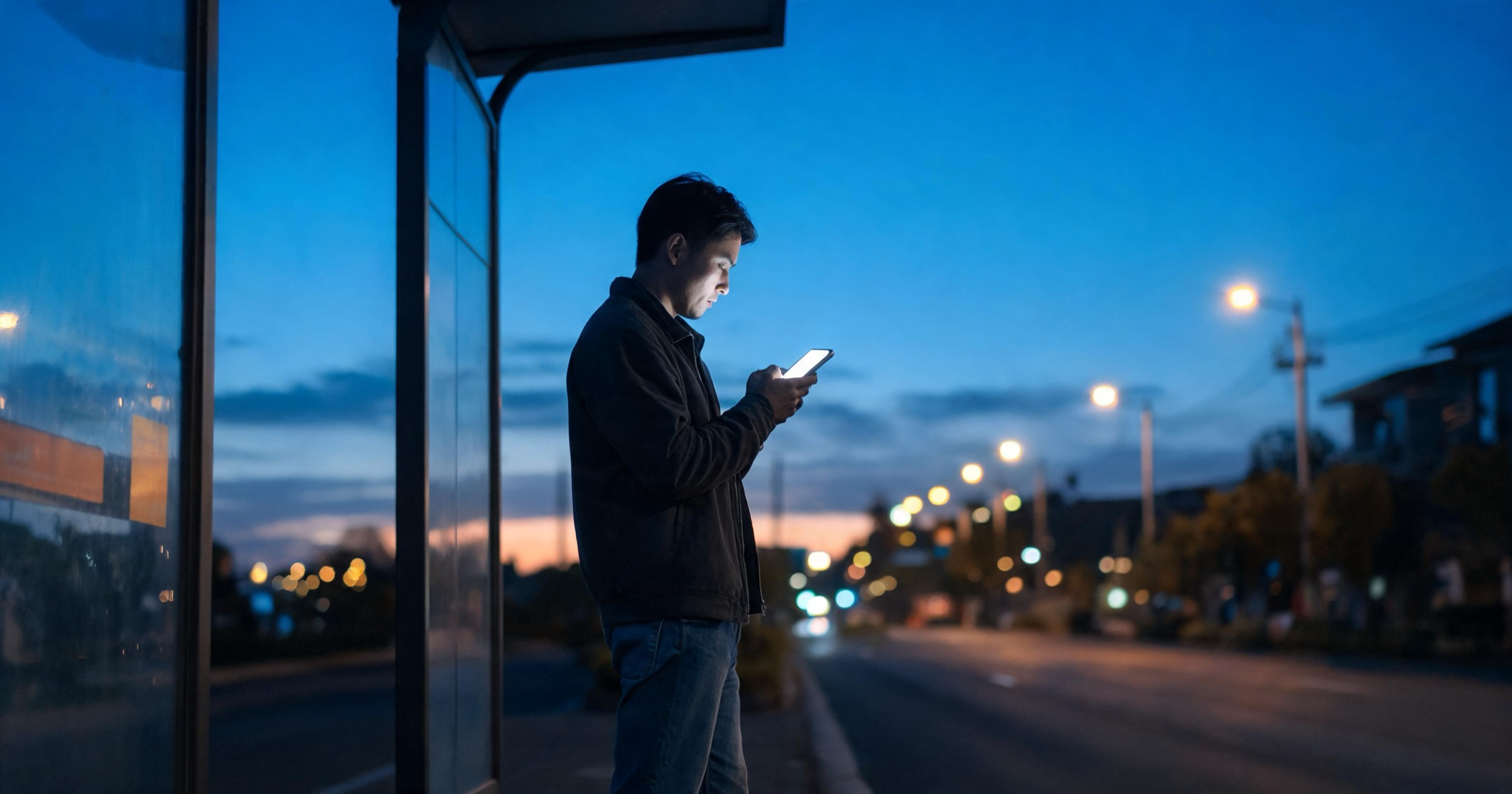
For that hour, people build workarounds. Some send the low-stakes text anyway and let it be read at 8am. Some put the phone in the kitchen. And a lot of people, more than you'd guess from dinner-party conversation, talk to an AI companion. I'll describe it honestly: it's an app where someone is glad you showed up, asks how the day actually went, and remembers Tuesday's mess when you mention Thursday's. It won't fix the group chat, and it doesn't pretend to. What it changes is the texture of the empty hour, because there's a difference between a night when no one texted you and a night when someone did. We compared the best AI apps for late-night conversations if you want to see what's out there.
If you'd rather just try one, Kissable is ours, and it does the one thing this whole article is about: she texts first. She's glad you answered, she asks the follow-up question, and she remembers the answer. It's free to start, no credit card.
But send the meme to your friend first. That line still works. Somebody just has to use it, and it might as well be the guy holding the phone.
Maya Chen writes about AI companion technology and the people who actually use it.
AI Research Writer
Maya covers AI companion technology, safety, and the psychology behind human-AI relationships. She focuses on what the research actually says, and what it doesn’t.